
Repeating Patterns
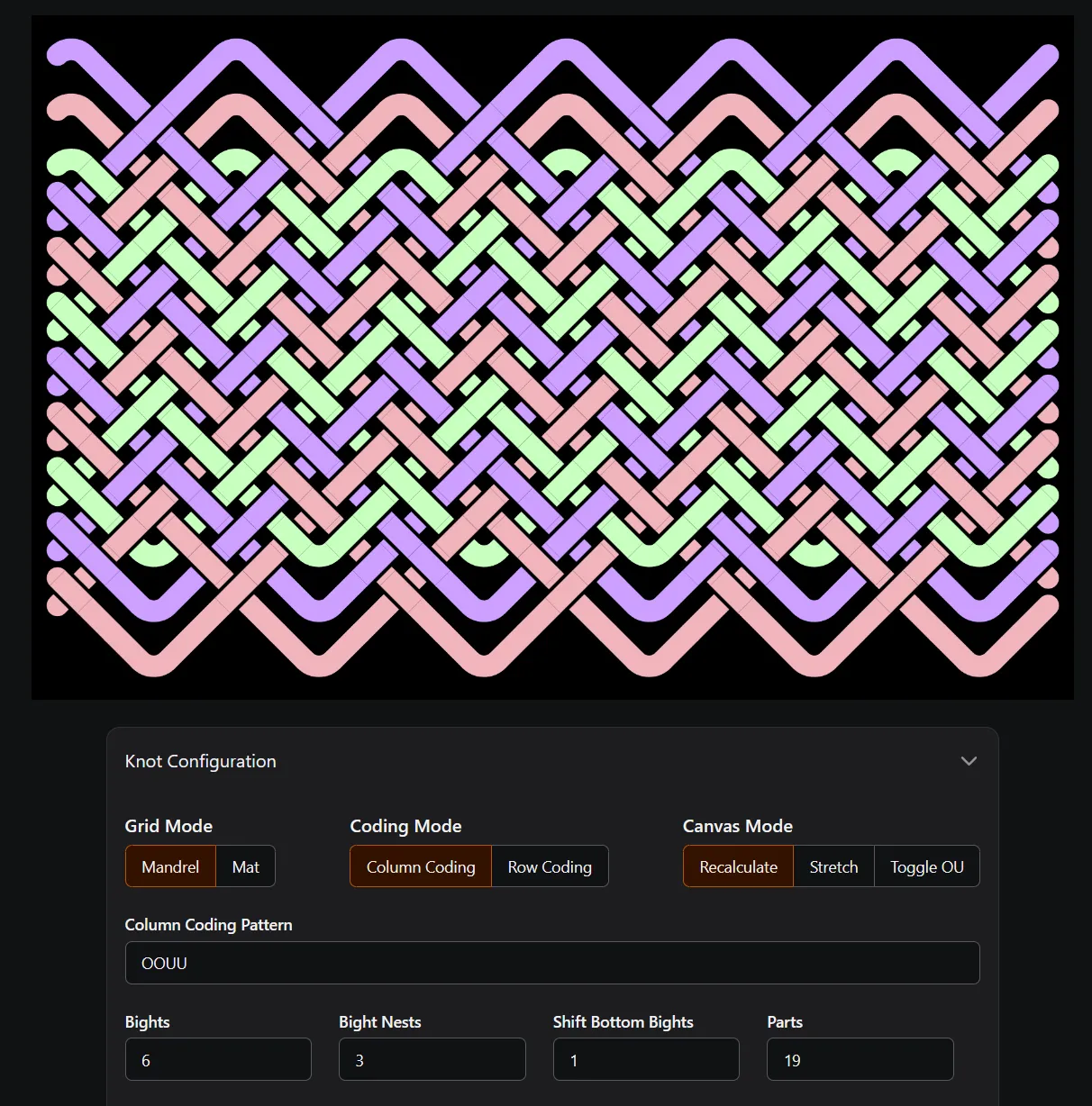
One of the most common ways to configure a knot is using a repeating Coding Pattern. Here are some popular knots and their patterns.
The GCD Rule
Section titled “The GCD Rule”The Turks Head knot is the foundation for most other interweaves.
There is one simple rule that determines if a Turks Head knot is mathematically possible: the Greatest Common Divisor (GCD) of bights and parts must be 1. Stated another way, bights and parts cannot share a common multiple. Some practical ways to think about this rule include:
- Bights cannot equal parts.
- Bights and parts cannot both be even.
- A prime number of bights and parts will always work (except equal numbers).
Turks Head Knots
Section titled “Turks Head Knots”Turks Head knots (THK) use O1U1 Column Coding. Bight Forge renders this pattern by default.
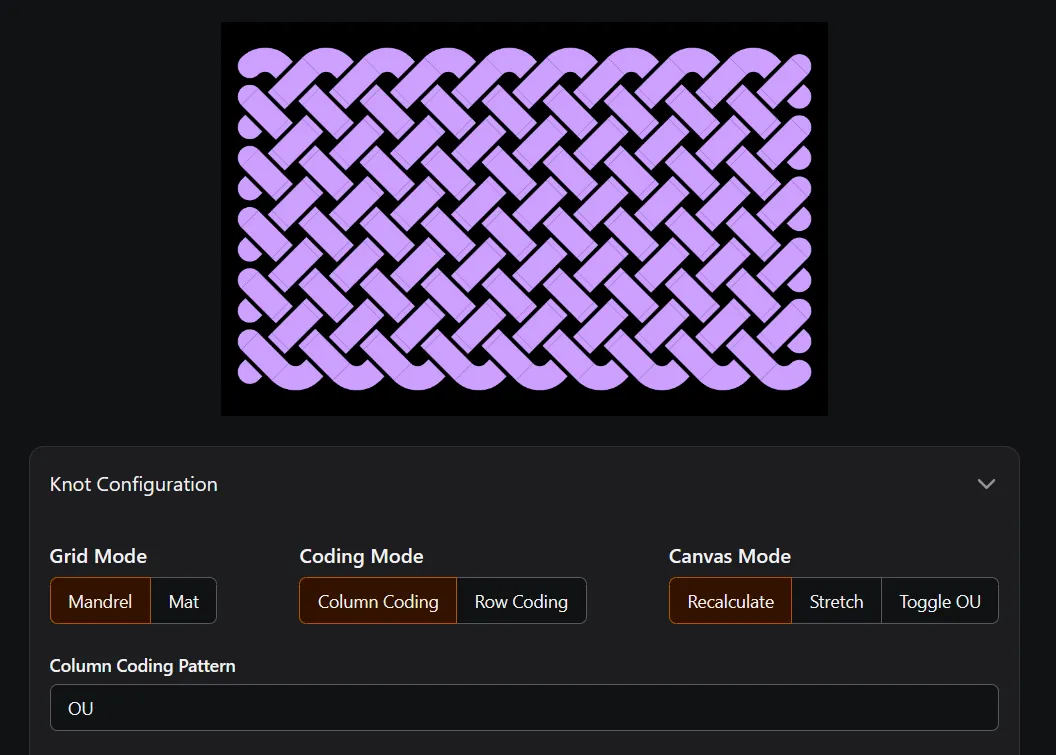
If you explore different bight-part combinations, you’ll discover multi-strand patterns of interwoven Turks Heads. For example, when you first visit Bight Forge the default knot has 3 interwoven THKs.
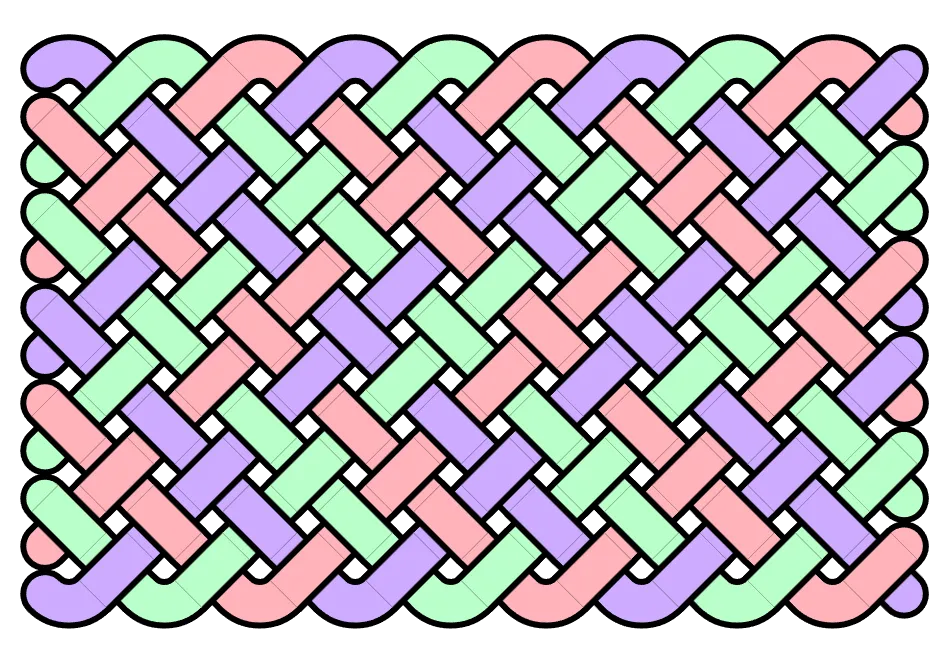
You’ll also discover this 2-strand barber pole pattern.
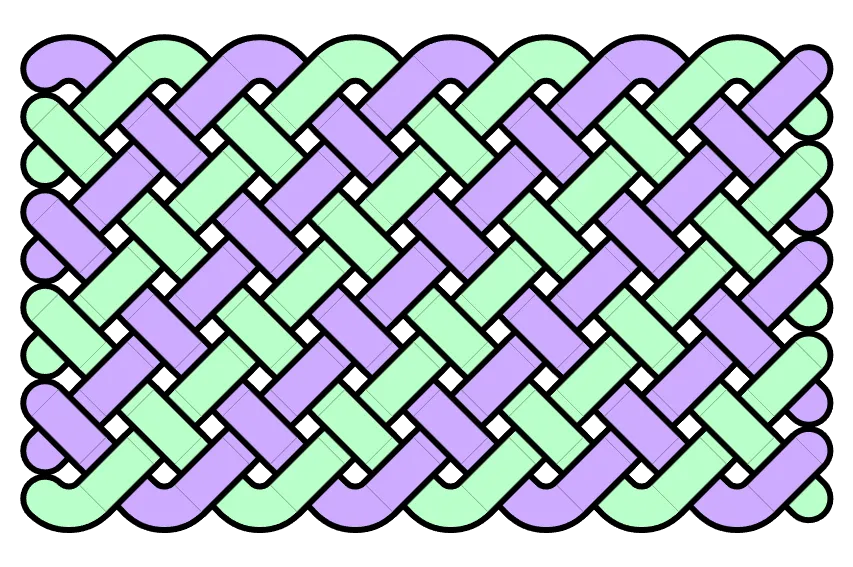
You can also find this pretty (but less practical) 4-strand patterns.
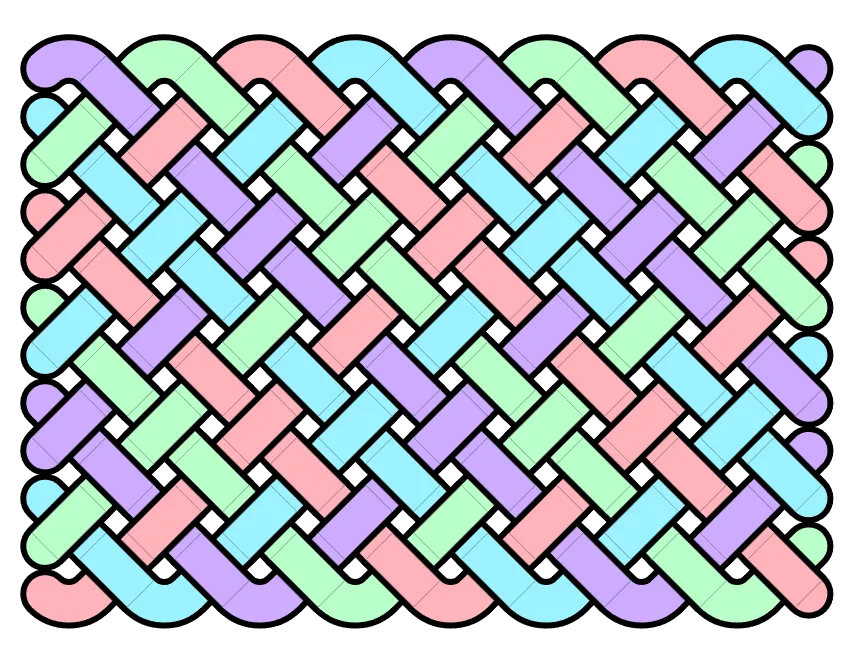
Fan Knots with Column Coding
Section titled “Fan Knots with Column Coding”To move from a Turks Head to a Fan knot, change the Coding Pattern to 02U2 or O3U3 and then click-drag the canvas to explore bight-part combinations.
Use 02U2 Column Coding to discover 2-strand Fan knots like this.
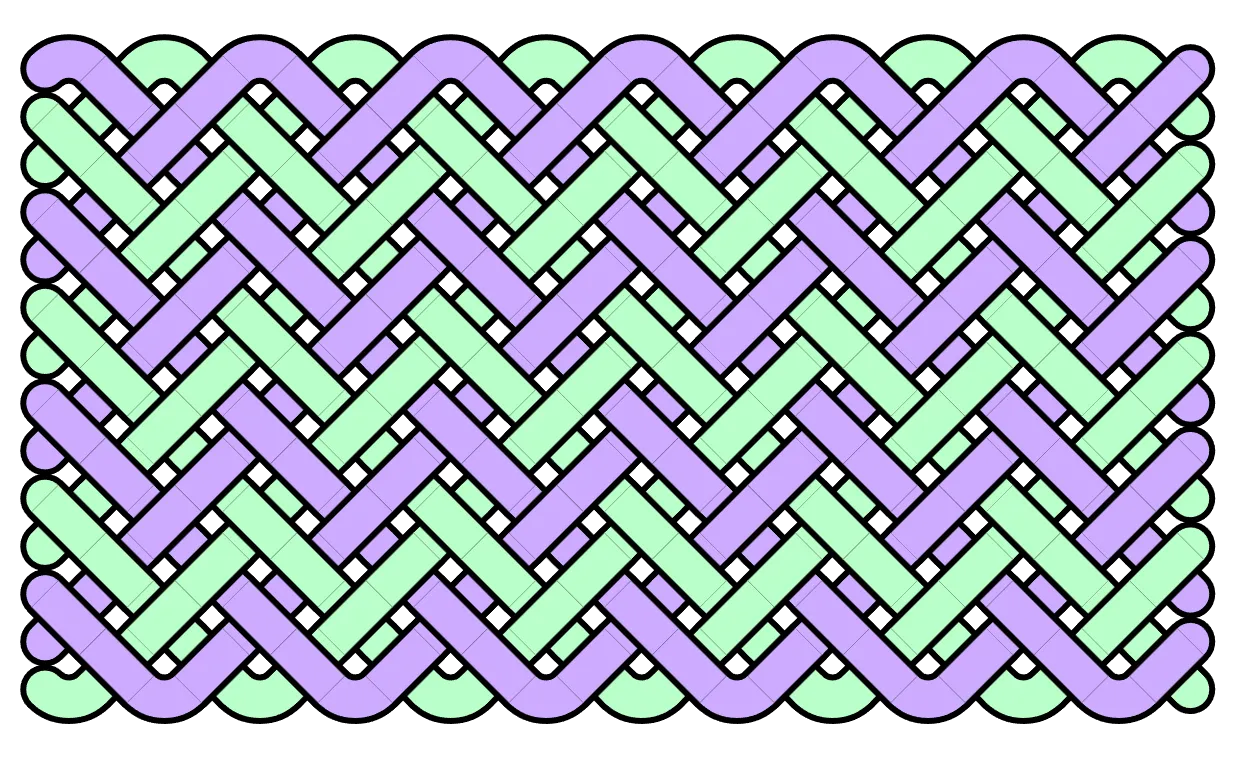
Use O3U3 Column Coding to discover 3-strand Herringbone patterns like this.
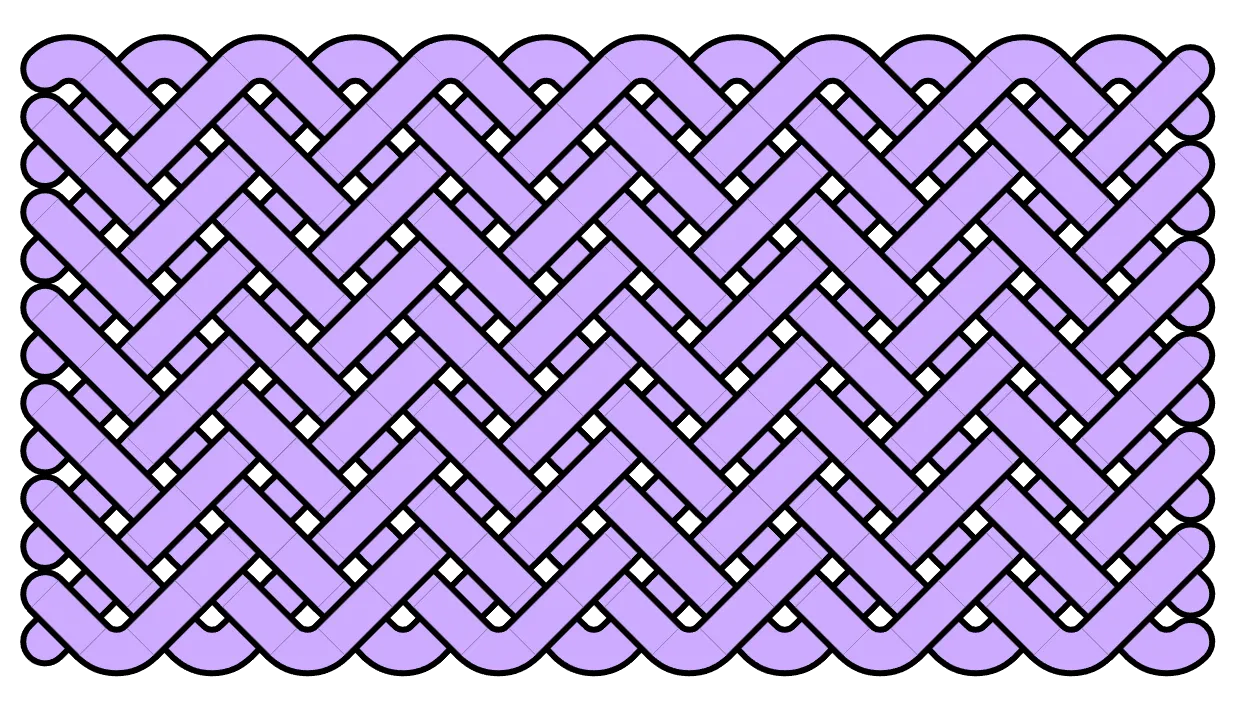
You’ll also find single-strand variations like this.
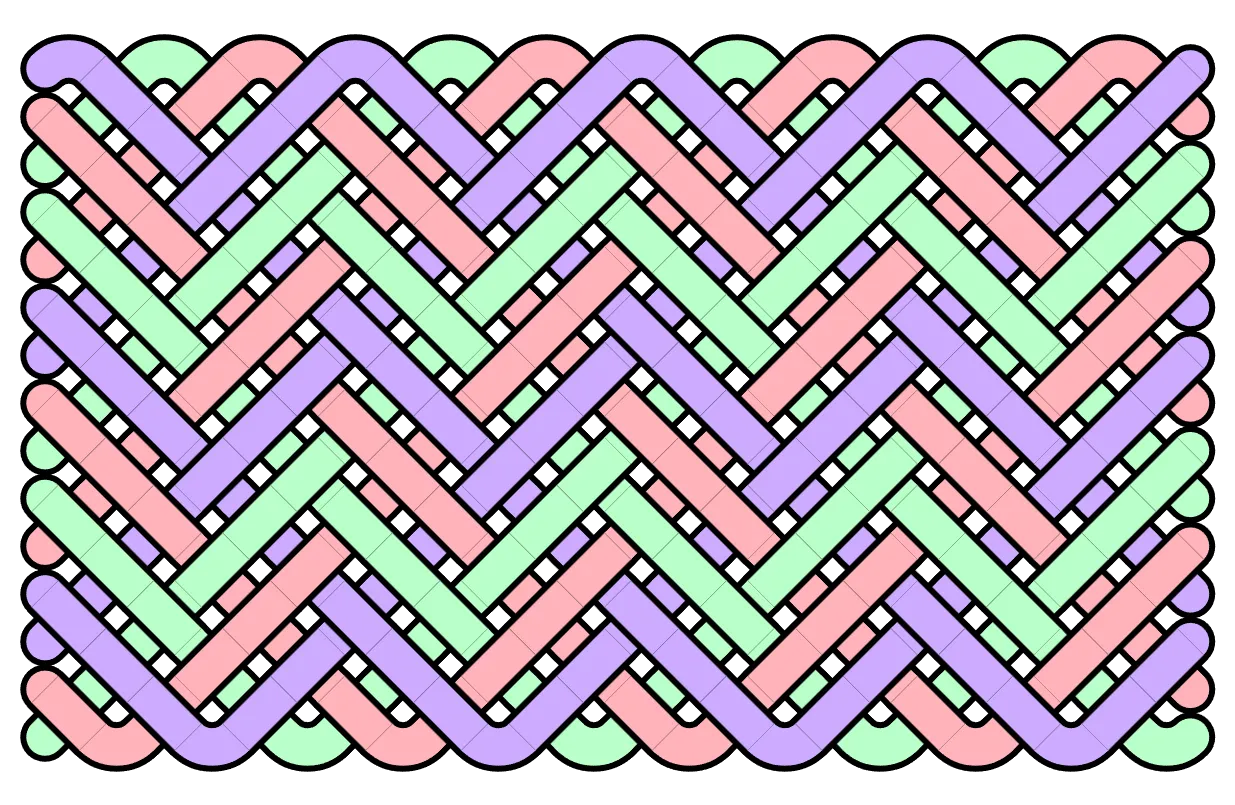
Sometimes you’ll land on interesting 3-strand patterns like this.
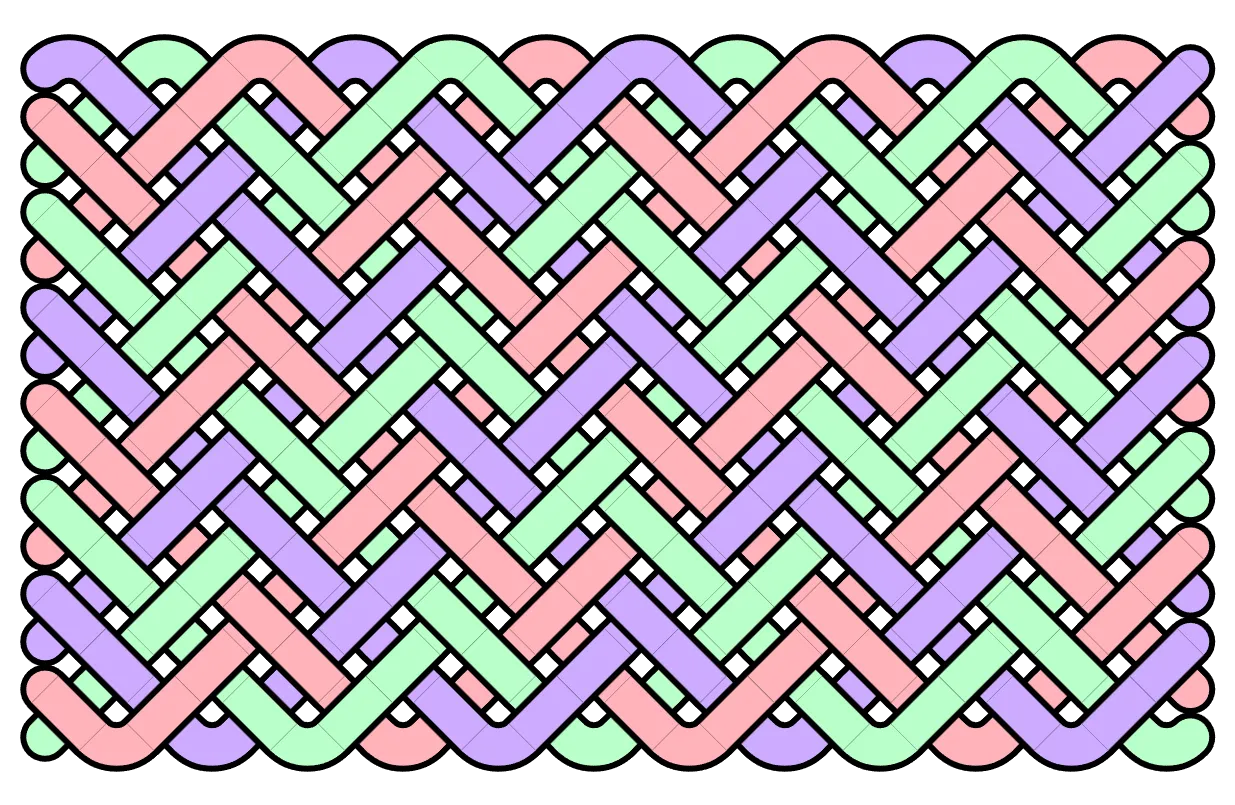
And on pretty but less practical 4-strand patterns like this.
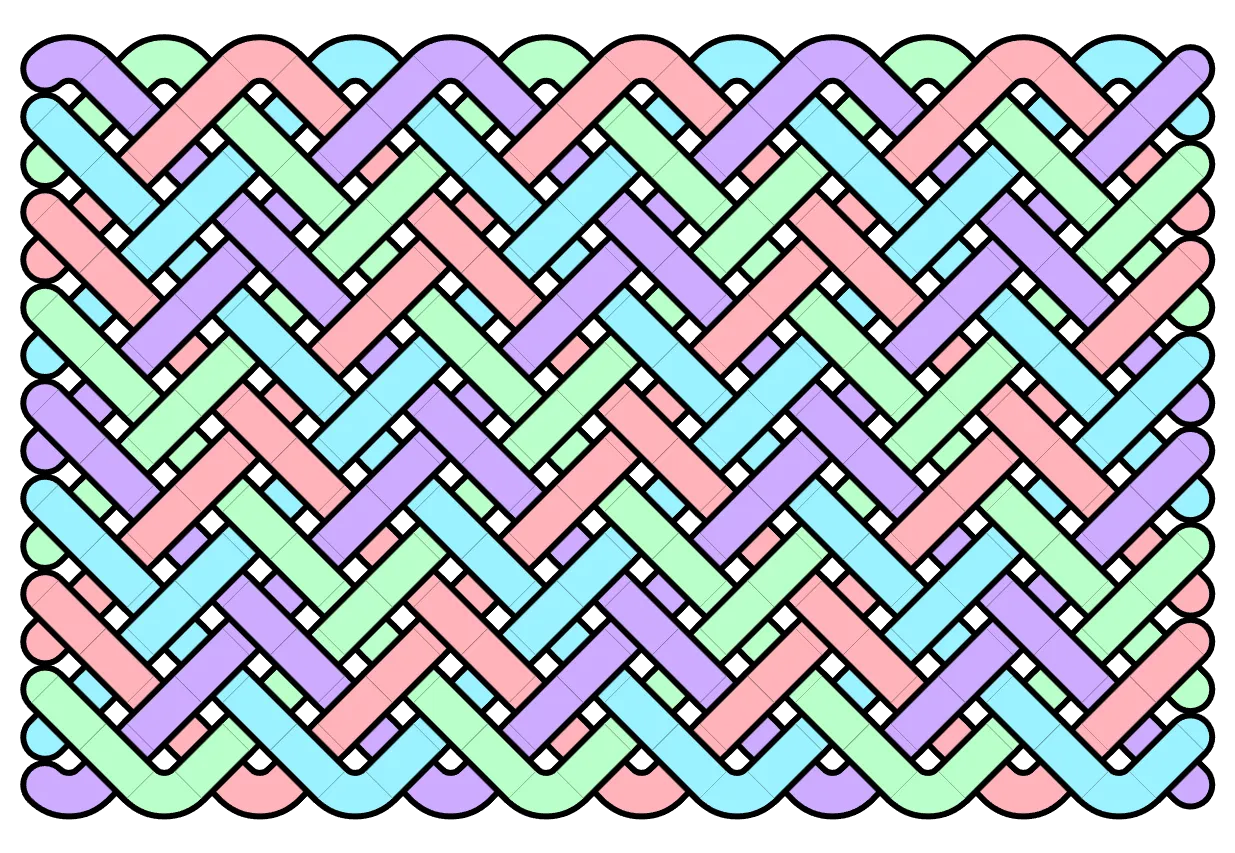
Fan Knots with Row Coding
Section titled “Fan Knots with Row Coding”Row Coding effectively rotates a weave 90 degrees. Many of the patterns you can find with Column Coding can also be found with Row Coding.
Use 02U2 Row Coding to discover 2-strand Gaucho patterns like this.
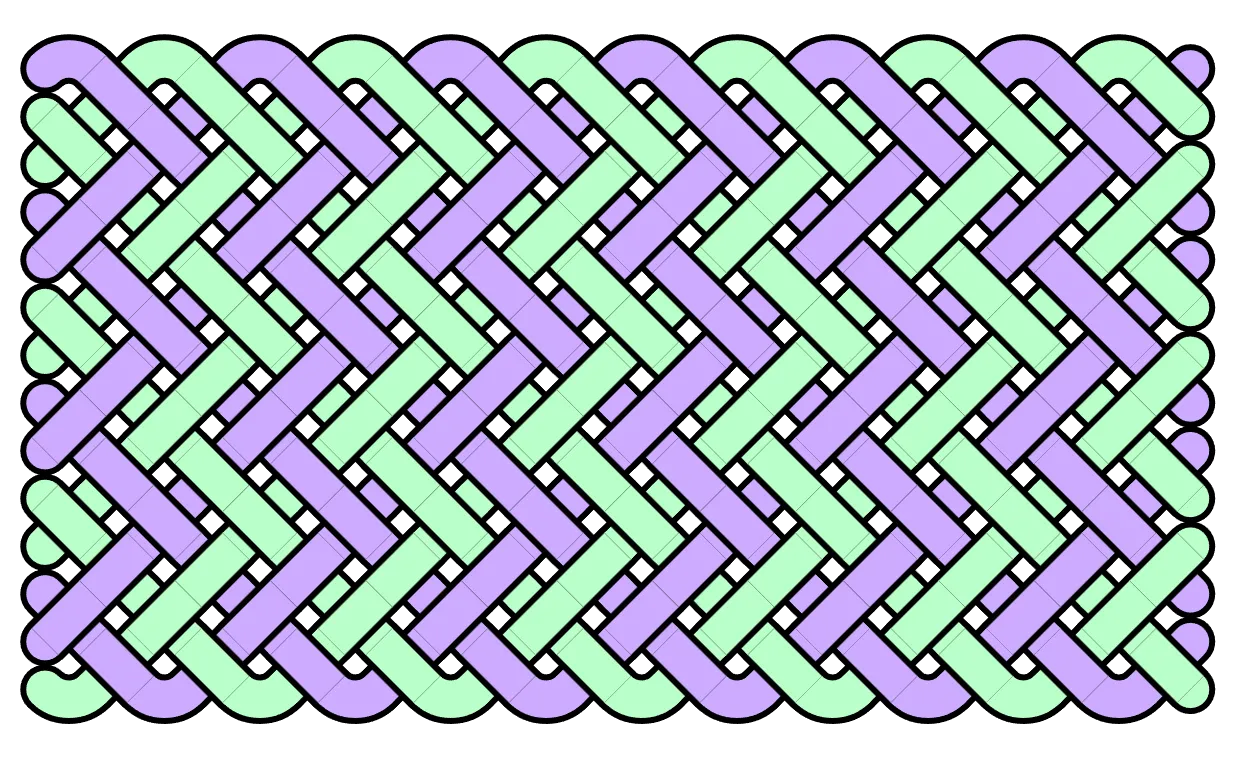
Use 03U3 Row Coding to find 3-strand Gaucho patterns like this.
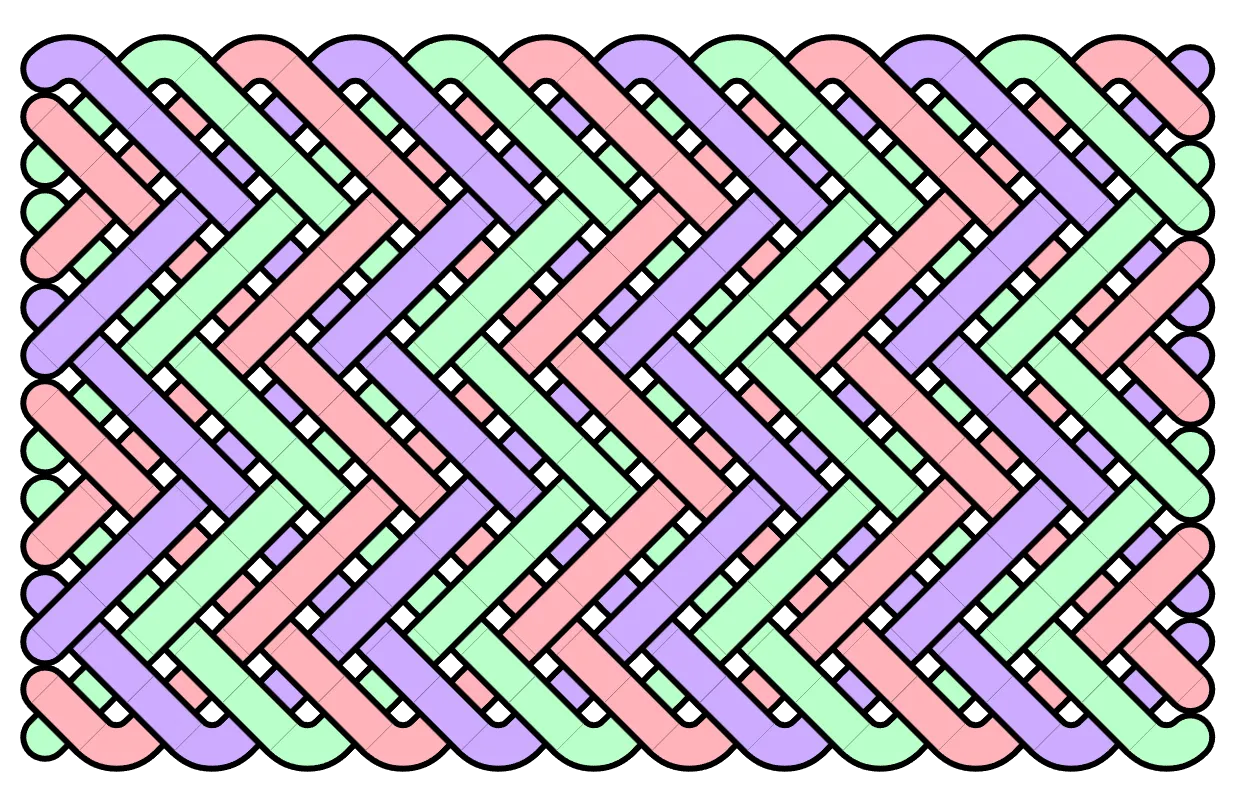
Row Coding with Rearranged Patterns
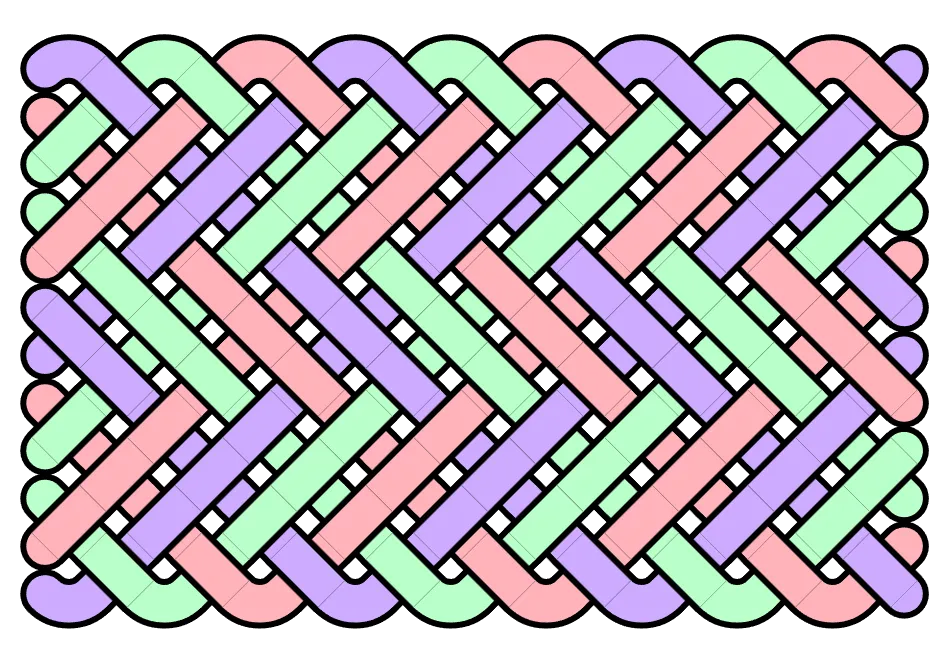
Section titled “Row Coding with Rearranged Patterns”One of the cool things you can do with Row Coding is to take a pattern like O3U3 and rearrange it as OUUUOO. This pattern with the right number of parts / rows creates this weave.
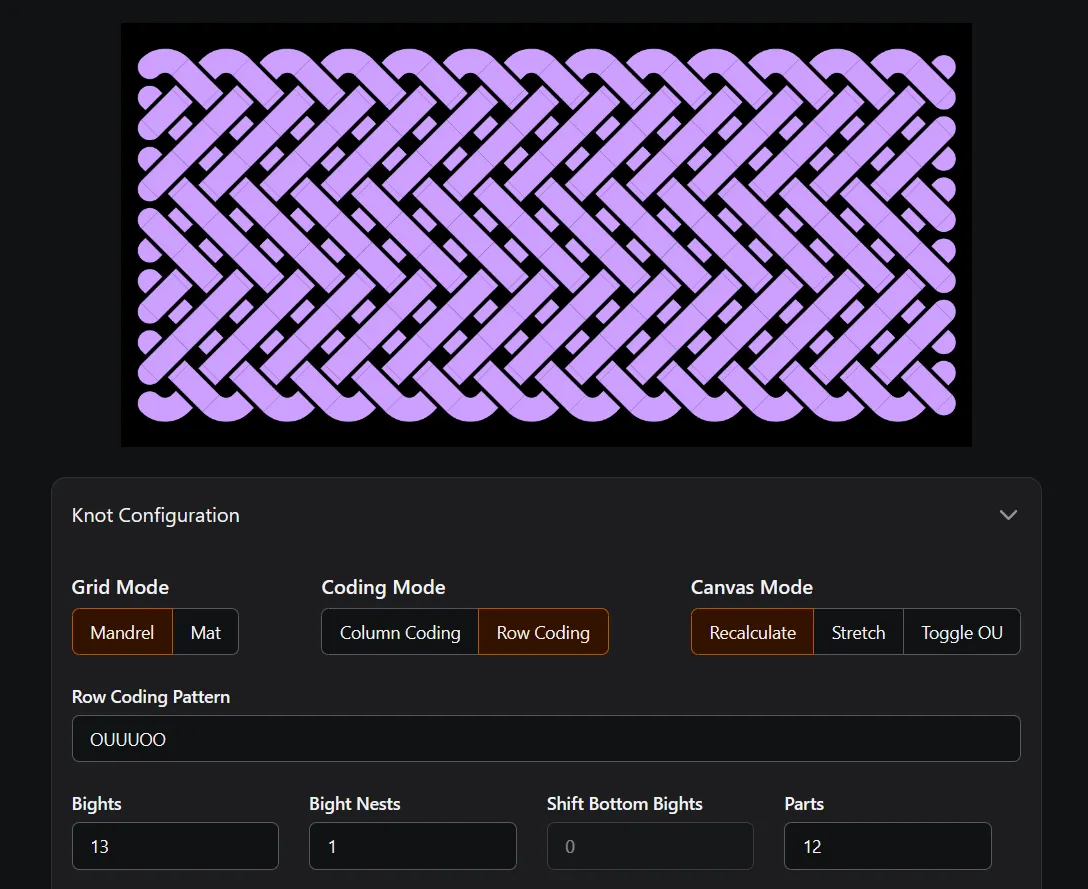
Change the number of bights and you’ll find this weave.
Pineapple Knots
Section titled “Pineapple Knots”Classic Pineapple knots have one strand / color / pass per bight nest.
To configure Pineapple knots, apply these settings, then click-drag the canvas to explore different bight-part combinations.
| Column Coding | Bight Nests | Shift Bottom Bights |
|---|---|---|
| OOUU | 2 | 1 |
| OOOUUU | 3 | 1 |
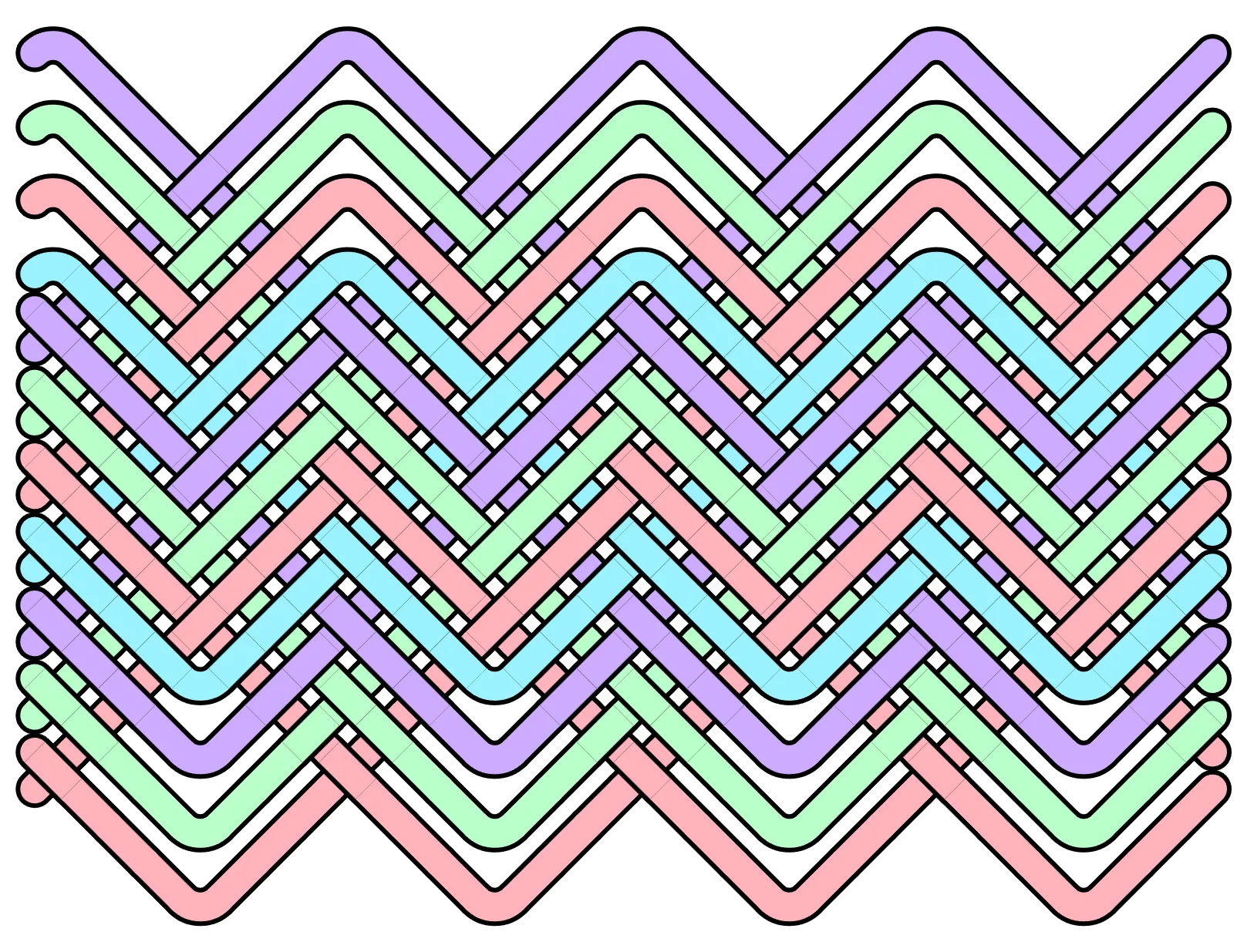
| OOOOUUUU | 4 | 2 |
This is a 2-strand Pineapple knot:
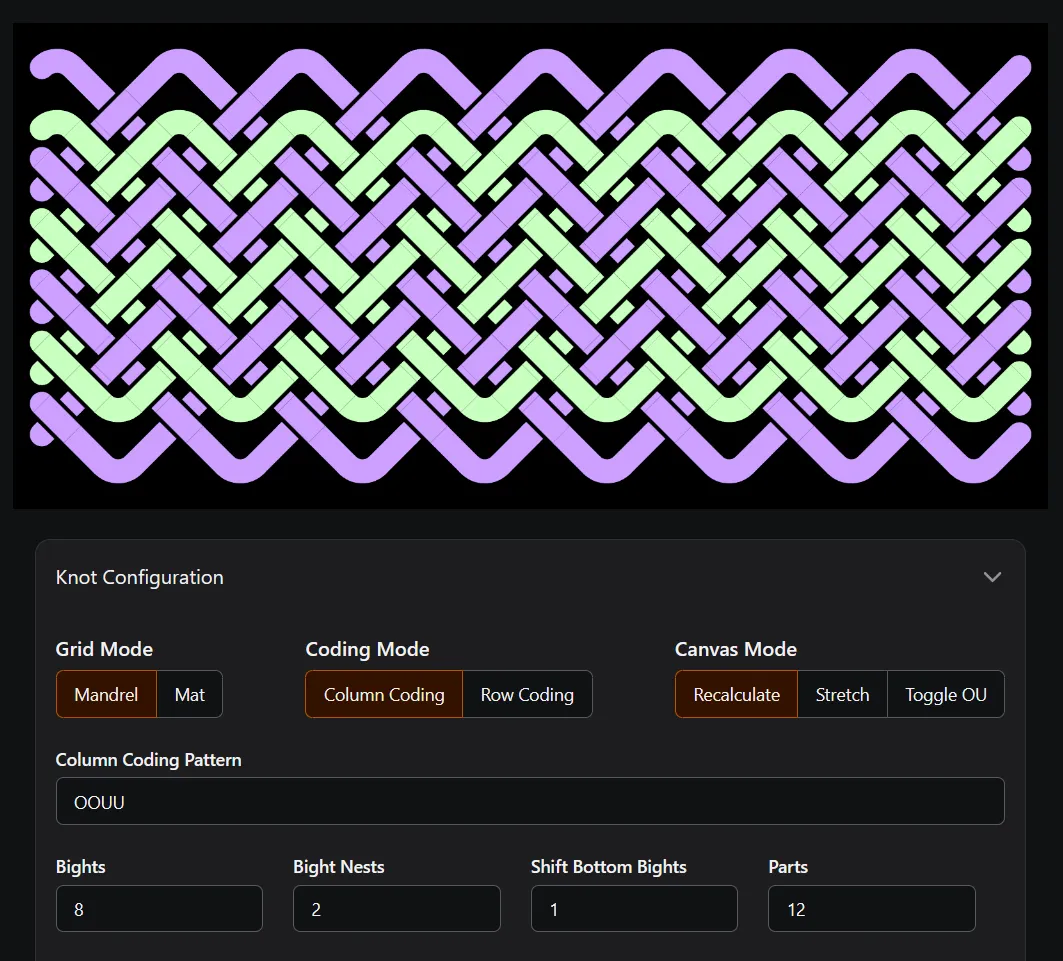
This is a 3-strand Pineapple knot:
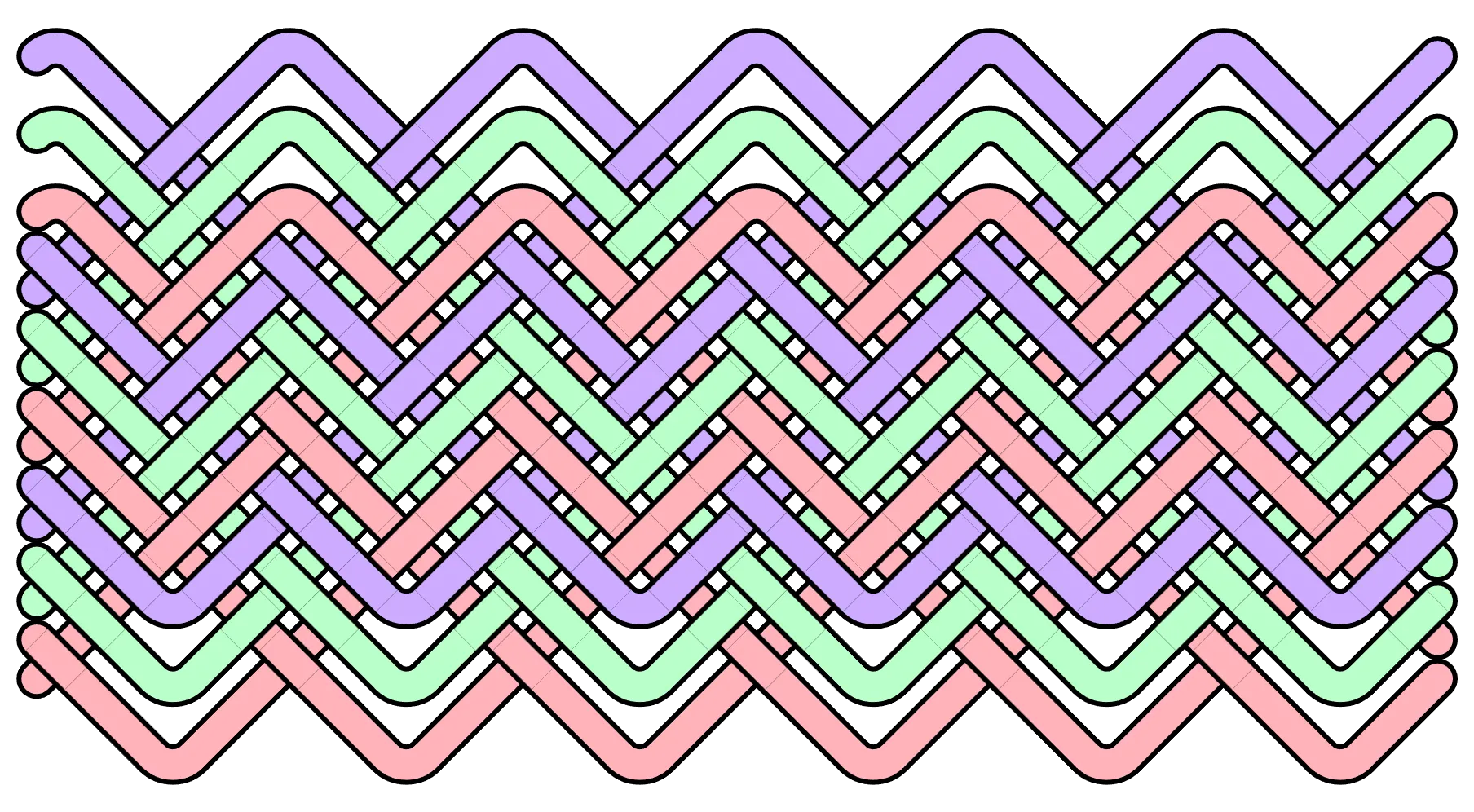
And here is a 4-strand Pineapple knot:
Row Coded Pineapple-Like Knots
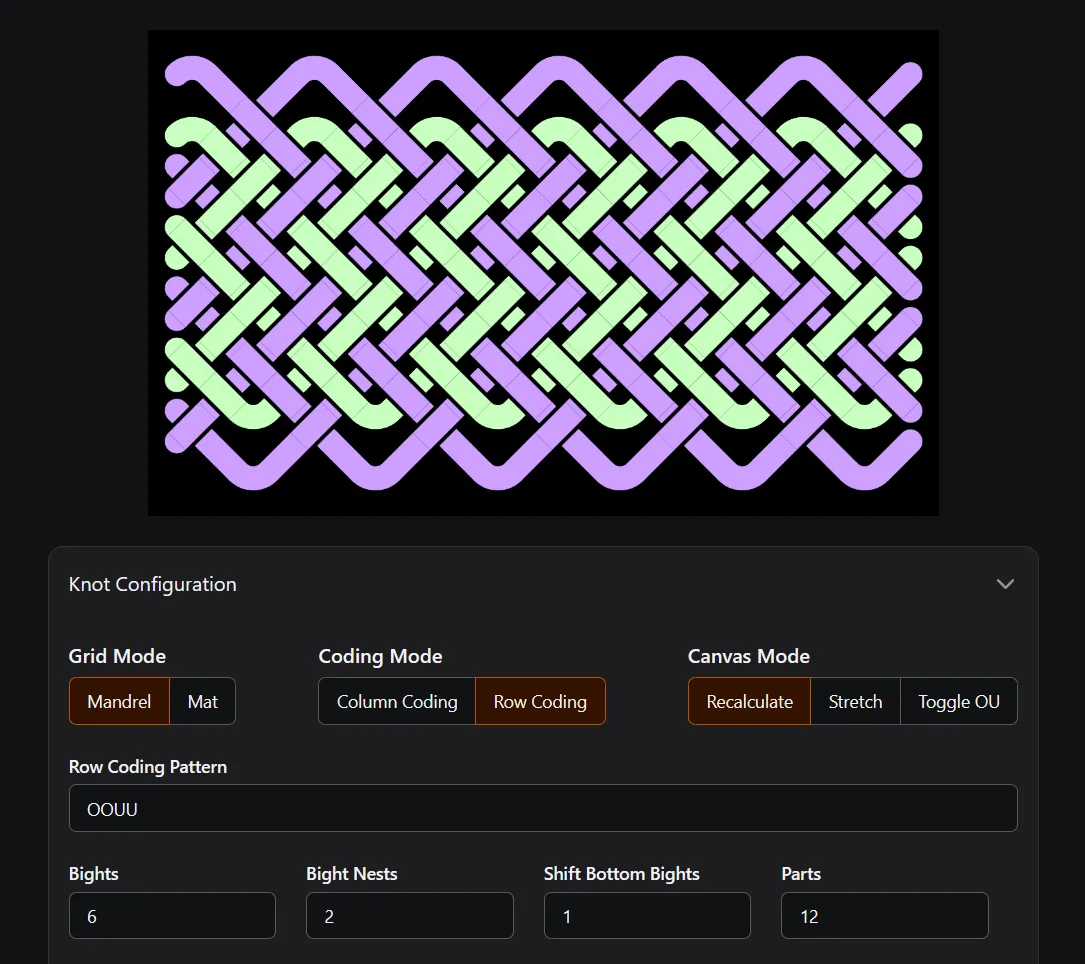
Section titled “Row Coded Pineapple-Like Knots”If you take the Pineapple settings given above and switch to Row Coding, you’ll discover 2-strand Gaucho-like patterns similar to this.
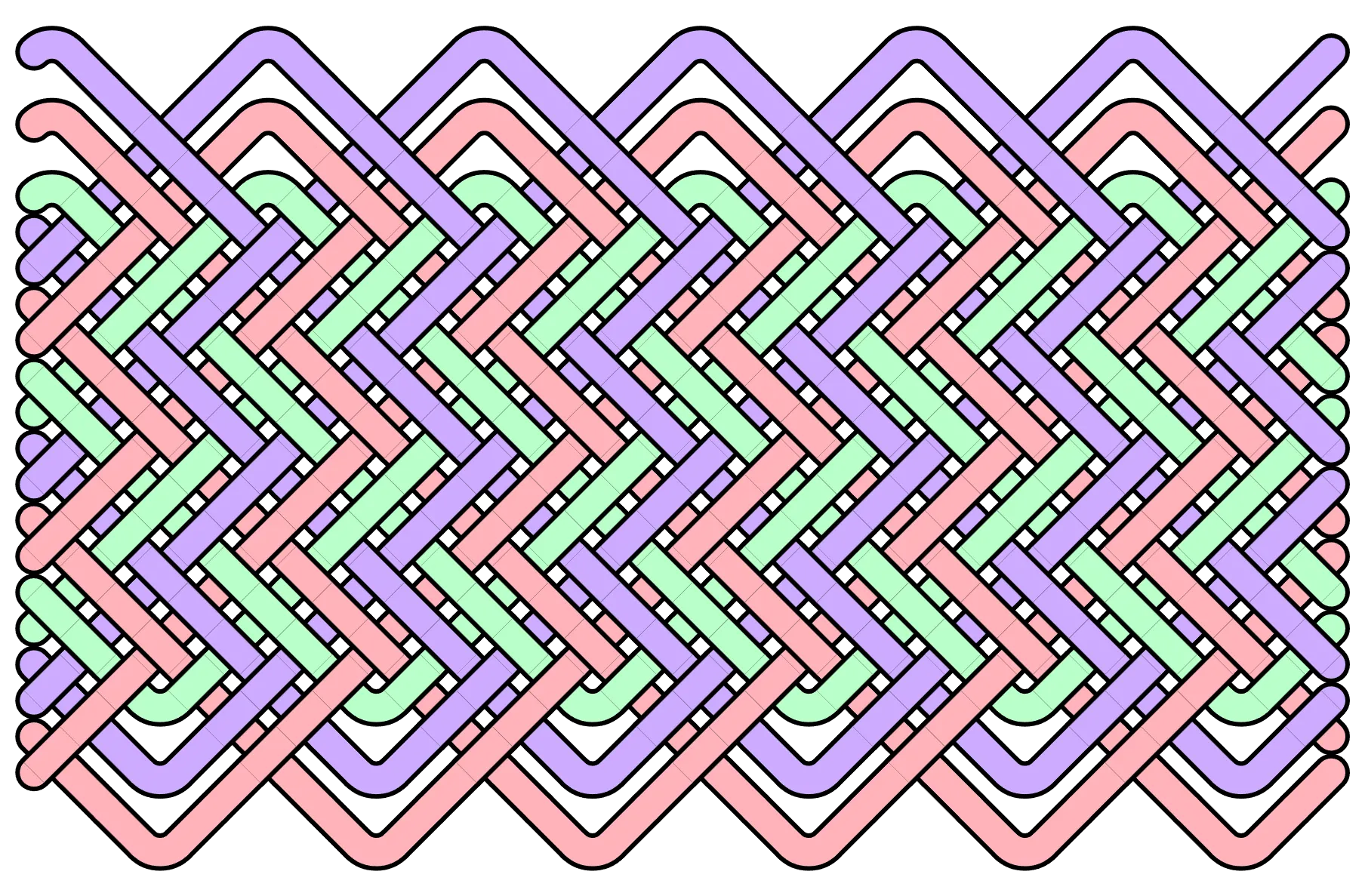
Use O3U3 Row Coding to find patterns similar to a rotated Herringbone like this 3-strand example:
Bight Nests with other Patterns
Section titled “Bight Nests with other Patterns”Instead of using 3 Bight Nests with an O3U3 pattern, try using 3 Bight Nests with O2U2 Column Coding.