
Turks Head Knots
The Turks Head - often abbreviated as TH or THK - is a single strand, closed-loop, column coded knot with a repeating OU pattern.
The Turks Head is the foundational knot from which essentially all other cylindrical knots are formed, either by:
- Using a different coding pattern, such as OOUU for Fan Knots.
- Using bight nests to vertically stack multiple THKs, such as Casa knots.
- Using a combination of coding pattern and bight nests for interweaves like the Pineapple.
The GCD Rule
Section titled “The GCD Rule”There is one simple rule that determines if a Turks Head knot is mathematically possible: the Greatest Common Divisor (GCD) of bights and parts must be 1. Stated another way, bights and parts cannot share a common multiple. Some practical ways to think about this rule include:
- Bights cannot equal parts.
- Bights and parts cannot both be even.
- A prime number of bights and parts will always work (except equal numbers).
Visual Exploration
Section titled “Visual Exploration”You may have noticed that Bight Forge does not have an input for number of strands. Instead, Bight Forge fills the grid with as many closed-loop strands as are needed given the Coding Mode, Coding Pattern, Bight Nests, and Shift Bottom Bights settings.
Bight Forge renders closed-loop knots with an OU pattern by default. The bight-part combination determines if the result is a single-strand Turks Head, multiple Turks Heads, or spaghetti. Click-dragging to resize the canvas is a fast way to see this in action.
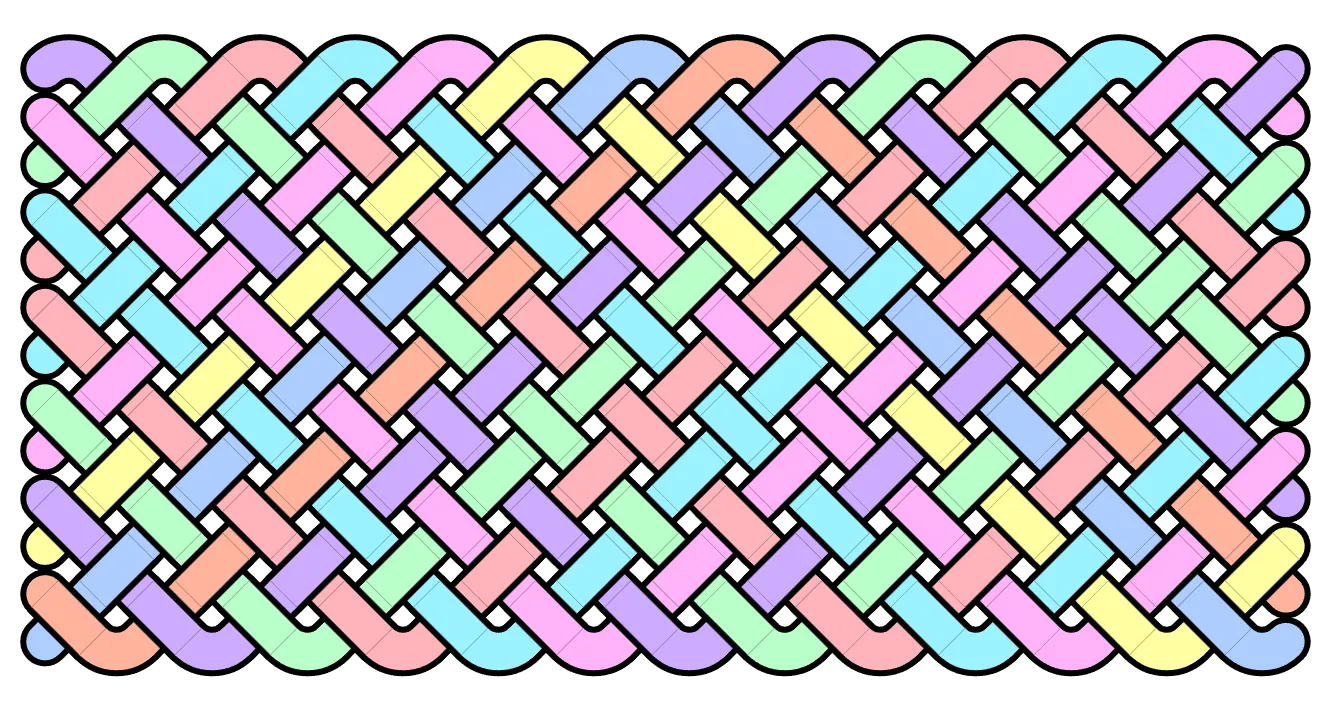
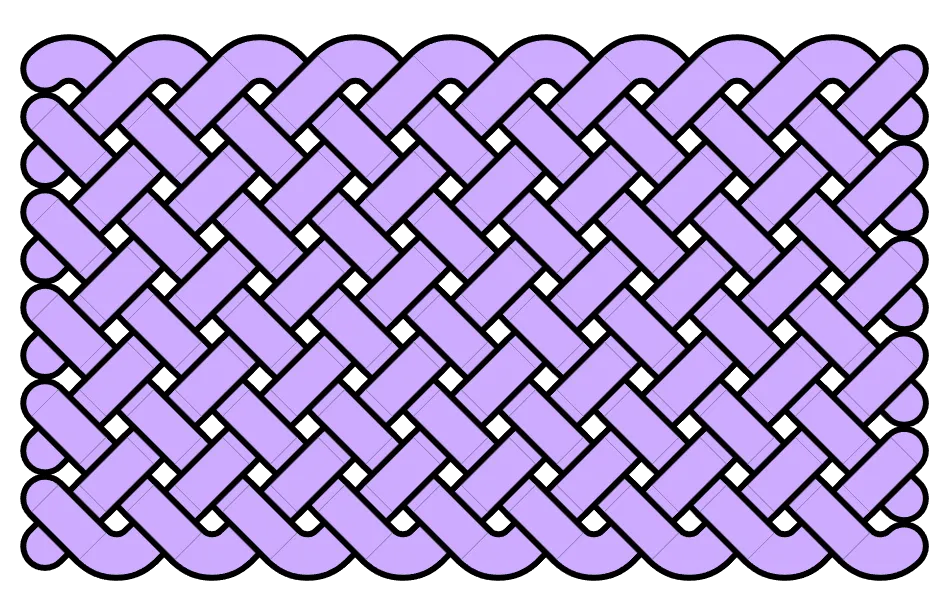
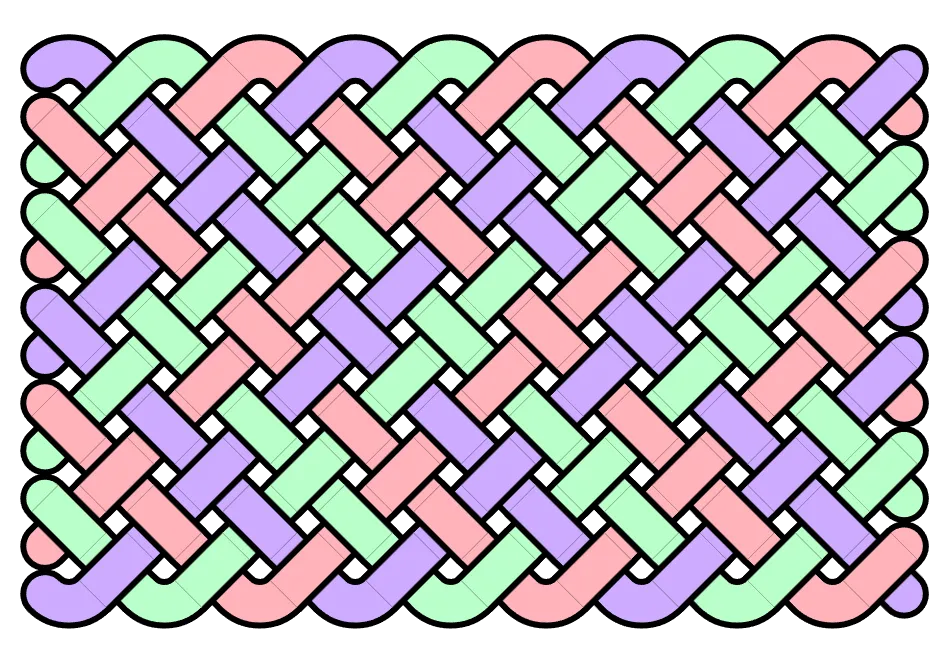
For example, when you first visit Bight Forge, a knot with 3 Turks Heads tied side-by-side is displayed:
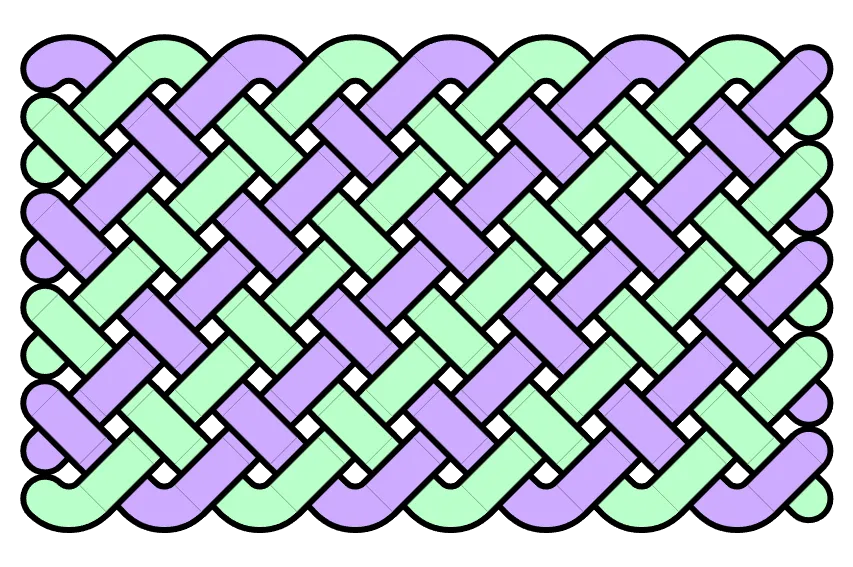
You’ll also come across this 2-strand pattern:
And you’ll discover this 4-strand pattern:
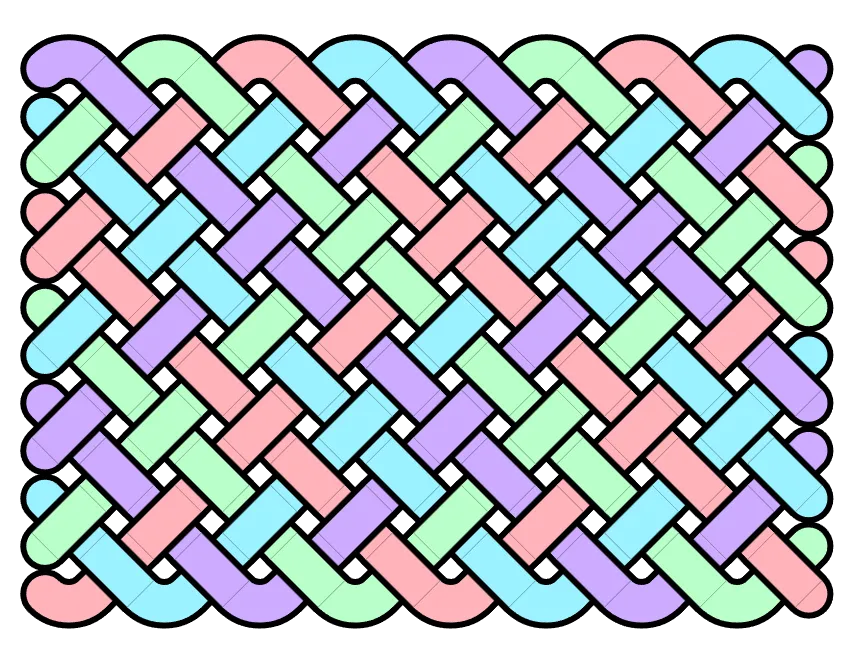
Or you could wind up with spaghetti: